I had a Twitter exchange yesterday… (no, don’t switch off…c’mon stay with me) …I had a Twitter exchange yesterday with another photographer. The photographer in question is called Paul Treacy and you can follow him on Twitter here or visit his website here. In addition to being an accomplished photographer with a varied client base, he lives in Sydenham, South London: close to my old manor in Anerley, where I grew up; Penge – the site of my education, in a school so bad they closed it shortly after I left, mainly just to reduce the body count, and Forest Hill, home of various connections. The comment that attracted my attention was “Maybe 57 images in folio isn’t too much after 20+ years shooting.”
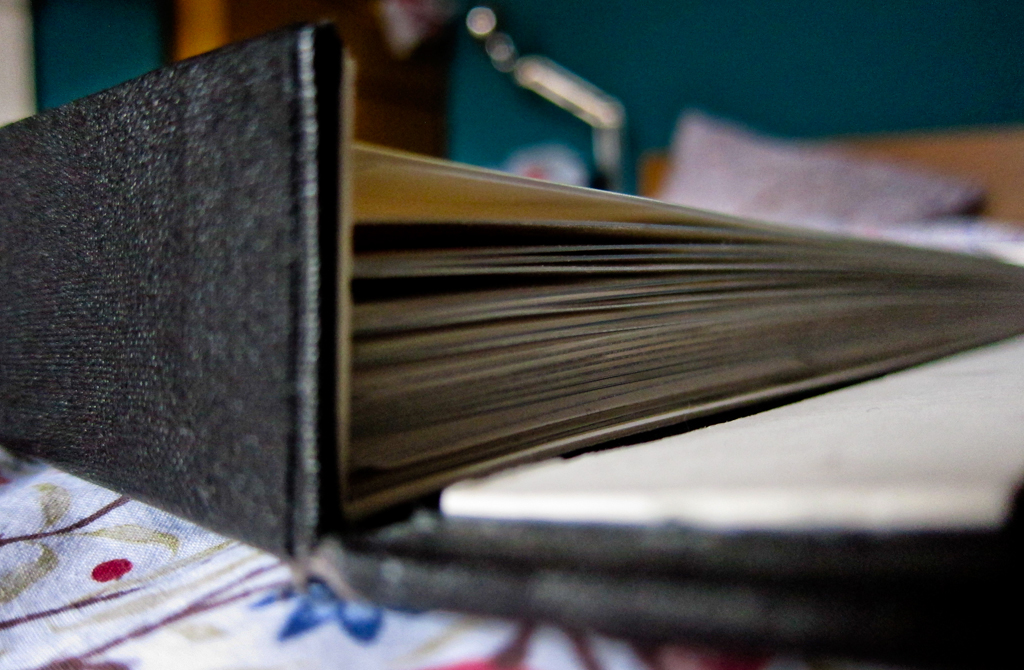
So when I talk about size, I’m talking about quantity; how many pictures should a portfolio contain. My response to Paul’s tweet was, “How easily can you get it down to 20?”, the reason being that when I was a photography student and when I’m advising the students at Swansea Metropolitan University, 20 is the magic number. This is not an arbitrary number but one confirmed by dialogue with my tutors (all practitioners, including Mark Power and Paul Reas), picture editors, art buyers and others within the photographic profession that view plenty of photographer’s books and commission on the basis of those viewings. The argument seems to be partly based on retentive memory and attention. It goes something like this: when someone, even someone used to viewing images, looks at more than 20 images, they will not remember the first image they viewed; the impact of the portfolio lessens as the retentive memory of the viewer is stretched over a widening range of material. It is common for a photographer to start with a high-impact image to immediately draw the viewer’s attention and you don’t want to lose that moment. In short, don’t bore your potential client.
Paul was adamant in the exchange. He has 57 images in his portfolio and likes portfolios of 80! The reasons he gives range from length of practice (20+ years), the many ‘flavours’ of his work (Paul works for a wide range of clients, extensively on personal work and street photography) and a more abstract notion that he refers to as ‘flow’, likening the viewing of a portfolio to reading a poem. These arguments are perfectly good and the bottom line is, a photographer knows his or her market and clients. And a portfolio should be edited so that it flows.
Yet to me, the portfolio or ‘book’ as it’s often termed, has a special place as part of the photographer’s marketing armoury and I very much believe that rather than ‘the bigger the better’, instead, ‘less is more’. My current printed portfolio has 22, 12×16 fibre-based black and white prints in it. Yes I know – 22 – far too many! It has varied from 20 to 24 prints over the years and it’s fair to say that although all photographers should have a portfolio, I don’t use mine much other than to talk to my students about how I constructed my portfolio. I used my portfolio extensively when I left college and started to approach clients and it got me work. I augmented the prints with a set of transparencies of my colour work (this did two things: demonstrated that I worked in colour too and, as much of my commissioned colour work was on ‘trannie’, proved I could expose it properly). I now have an iPad with a portfolio app. holding about 50 images currently. The advantage of the iPad is that you can put together your 20 image portfolio and just show that. If a client wants to see more you can show other projects with a couple of taps of the screen. And the images look great. The iPad for me doesn’t replace the printed portfolio but it does emphasise more than ever why 20 prints is enough.
Something else that negates the need for a large portfolio is the website. All photographers should have a website and the website is often the first full contact you have with a potential client (having first sent a card or an email with a link). The website should contain an extensive selection of edited work. This can give a full flavour of the photographer’s oeuvre but perhaps can’t, by its very nature, flow in the way that Paul Treacy suggests a portfolio should flow. However, it’s very unlikely that a photographer will show a portfolio before a potential client has seen their website.
Another alternative to the large set of prints is to include a book or books with your portfolio. Published photographers have long included copies of their work as part of a portfolio (and this has a certain amount of kudos attached to it). With the advent of digital one-off book production from the likes of Blurb, UBYU, Loxley Colour etc., you can now either print your whole portfolio as a book or just expand the work you show by printing a book of say, a project you feel requires greater coverage than the 20 images your portfolio can accommodate. Just include the book in the portfolio (this works better if you use a print box). Now I know what you’re thinking: ‘Paul, doesn’t that mean you are putting more than 20 pictures in your portfolio?’ Okay, so you’ve got 20 prints and a book with another 30 or 40 images; how does that work? My contention is this: the book will be seen by the viewer as different from the prints; as an object. They will look through it and, assuming they like it, remember it. The book should reflect the photographer’s style of course, a client will expect continuity, a voice, but the prints should be memorable and the book also. As I’ve just mentioned, some photographers are printing their portfolio as a book; printing on the best stock available, maybe getting a slip case made to add a more luxurious feel. And this can all be done for less than the cost of a traditional portfolio, especially if one factors in commercial printing costs. But I’m not a fan of this, except as a measure to send out multiples of your portfolio. The portfolio is about quality and the care you put into your work.
As I’ve said, there are many ways to show the extent and variety of your practice outside of this product you take around, bike or post to your client. The portfolio shows how much you value your work and, by extension, how much the client knows and respects this; gets to know one of the most important things about you: if you take such care over the presentation of your work, you will care about the work you do for someone else. It means that even if you have never worked for the client in question, you have introduced a suggestion of trust alongside an agreement that your creativity and skill are sufficient. The prints in a portfolio should be better than the prints in a book by Blurb or from the finest printers in Verona. Images on screen, on the Retina screen of the latest iPad, look beautiful but the person viewing them knows how easy it is to enhance images for screen; (almost) anything can look good. When I show fibre-based darkroom prints or archival digital pigment prints on baryta paper, I ensure that they have a depth and luminosity that is as good as I can attain. I will put a couple of projects and a few singles together to show that I can work in series, on stories, and produce good individual frames. Keep it updated rather than show the history of my work (which I can do on my website) and only carry 20 prints; the more prints you have, the heavier your load of course! The iPad? It’s small, light, gets no heavier the more images you add; it’s the future. But the portfolio is still there: the ultimate showcase for your work.